

Solved Genres
On horror movies, country music, and short stories

It took me until I was middle-aged to realize that I am a horror movie fan. It wasn’t something I was conscious of being the case—I simply tended, over the years, to opt for horror films when I had the chance to watch a movie, and by the time I was in my forties, I was pretty conversant with the genre. I can give you an all-time scariest movie list off the top of my head (Ringu, Exorcist III, Martyrs); I can tell you the aesthetic differences between K-Horror and J-Horror and New French Extremity; I can predict with some authority where the jumpscare beats in a movie like Insidious are going to occur. Yet I somehow didn’t consider myself a proper horror fan, like some people I know.
A lot of horror fans wear their genre preference as something of an identity-marker. There’s a conscious pride people take in being able to handle a movie like Hereditary (*scoffs* the lady on the ceiling thing has been done a hundred times before) that is similar to the pride some people take in being able to withstand a 1,000,000 Scoville Unit hot sauces (also guilty as charged). And catching the horror bug is often something that occurs in adolescence, when we form lifelong identity allegiances. But horror sneaked up on me, over the course of my adulthood—just like a good movie monster, it walked me down.
The occasion for writing this is having recently watched the recent horror film Smile, while my wife was out of town (I almost exclusively watch horror when my wife is absent, as she cannot handle even the silliest, non-gore version). Smile is very boilerplate and wears its influences right on its sleeve—the plot is basically a mashup of It Follows and Ringu, and I would place it in a subgenre that might be called “Passing the Virus,” in which the protagonist is exposed to someone or something that “infects” them with the bad thing, and they have a few days to pass it on to someone else. Many of the beats and scares are lifted directly from the American remake of Ringu, The Ring—for instance, the horrifying cut to the dead face of the husband which exactly follows The Ring’s cut to the dead daughter in the closet. The monster, when revealed, was satisfyingly scary and practical effects-based—it felt like they really went for it with that, which was nice to see. In the end, Smile is just a well-executed mid horror flick that knows it's mid and isn't trying to do or be anything more than that (for that reason, I liked it more than Barbarian, which I didn't think was very scary).
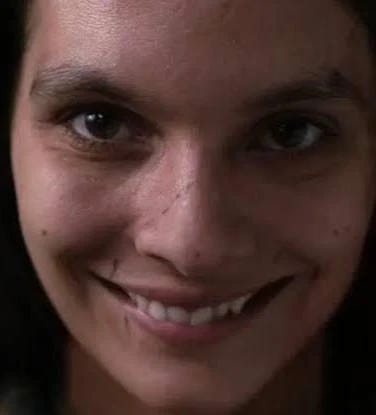
My reason for writing this, though, is not to do an untimely capsule review of Smile. After watching the movie, I was idly going through the horror subreddit, and it seems most Redditors were disappointed with Smile. Too predictable, too jump-scary, not scary enough, protagonist too stupid: all the usual gripes leveled at an okay horror movie: totally reasonable complaints! Reading these led me to realize I am almost impossible to displease when it comes to horror. I like all of it, from highbrow stuff like Midsommar or The Tenant to the lowest-brow stuff like Abigail. I like slashers and stalkers, I like gorefests and psychological thrillers, I like popcorn shock and I like slowburn dread. Just about the only kind I can’t go for is Torture Porn like Hostel or A Serbian Film or the Saw franchise, and I think that’s to my basic credit as a human being. But there’s really just about no other kind of media I’m this easy on, and reading those Reddit reviews, I wondered why that is.
It also occurred to me that the only other subgenre of art I am this uncritical about is country music (by which I suppose I mean country up to around 2010—I simply cannot get down with Pontoon Boat/Beer Pong/Bro Country), and further, that horror and country really have a lot in common. Both are traditionally considered culturally lowbrow. Both have incredibly loyal fanbases. And both, perhaps uncoincidentally, are what I think of as “solved genres” with extraordinarily codified formal conventions. A mediocre horror film that is competently written, acted, and filmed will reliably produce pleasure; in the same way a mediocre country song that is competently written, performed, and produced will produce its own reliable pleasure.
When I say they are solved genres, what I mean is that the rules for making a generic, basic version of the thing are very clear, and if you abide by those rules—in horror, hitting all the usual scare beats; in country, using a 1-4-5 progression—you will have an iteration of the form that works. It may be uninspiring, it may be the middest mid of all the mids, but it works. Think of these forms as baking as opposed to the freehanded ingredient-slinging of other less codified forms. There is less convention or agreement on form in something like a high literary novel, a condition that is both freeing and often cases damning, as it is simply harder to know what to do to make it good. But even in the hands of a genius master like Kubrick, a horror story must hit certain beats, and arguably the film is better for that reason (The Shining is a top-three Kubrick for me, along with Full Metal Jacket, and Paths of Glory).
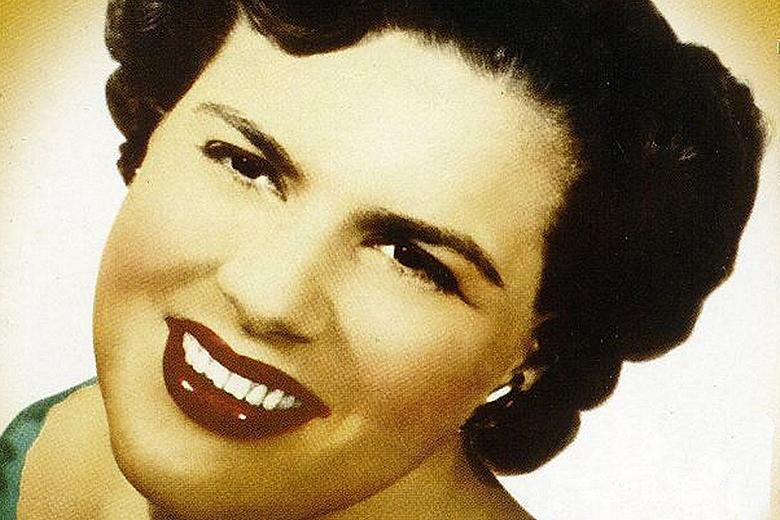
This is not to say that these forms cannot produce Great Art. When a genius like Patsy Cline or Stanley Kubrick has a hand in the proceedings, it elevates the work into something entirely different, something idiosyncratic and special, 10/10. But it’s also perfectly satisfying in its 5/10 incarnations. You don't have to reinvent the wheel, you just have to know how the form works and do the thing in a relatively intelligent, pleasing way that has a bit of a personal touch—e.g. Smile or Alan Jackson.
I’m thinking now that you can also apply this to literary short stories. Literary short stories are, compared to literary novels, a solved genre. There are arguably more ways of writing a short story than there are ways of writing country songs or making horror films, but broadly speaking there is a classic literary short template that, in the hands of a competent writer, works to produce readable fiction. It is, more or less, what I teach in my classes: put a character in a situation that exerts pressure on them, keep ramping up that pressure in consequential ways that demand they change or at least reckon with the possibility of change, and you will have a real story. Does this mean the story will be great? No. Good? Not necessarily. It may be boring and inert, but it will, in some way, work. I’m pickier about short stories than horror films or country music, but there still is a broad swath of short fiction I can be satisfied by. I’m thinking of, for instance, Curtis Sittenfeld. Her prose style is smooth and readable; the structures are sometimes predictable, but solid; the characters grapple with change in familiar ways, but Sittenfeld’s hand is sure—masterful, at times—and I am reliably satisfied at the end of one of her stories.
Enjoying solved genres does not, of course, mean you can’t like unsolved (or less-solved) genres, as well. I am capable of enjoying complex postmodern novels and contemporary art and atonal skronk. But, dispositionally, I tend to be drawn to genres of art with more established rules, that value, I suppose, aesthetically conservative formalism. I’m not sure if this is to my discredit, or not. But I like a kind of craftsmanship in my art, a sense of the artist as laborer making a thing that they have learned to make from looking at lots of similar things. There is a level on which I can appreciate something otherwise unexceptional that exhibits an exceptional mastery of form.
I understand the potential objection to this—in a sense, I am arguing for predictability. But a certain amount of predictability in art isn’t necessarily a bad thing. Even the highest of high-literary novels—Mrs. Dalloway, e.g.—have underlying predictability. Clarissa’s great love has returned from India, what will happen? Introducing Peter Walsh back into Mrs. Dalloway’s life after first acquainting the reader with the fact of him decades ago is essentially a predictable move on Wolff’s part. But who would object to that? The sustained linguistic superbity requires a solid base on which to be displayed—the reader needs to be able to easily intuit the dramatic action and stakes at hand because they are expending most of their attention on the language. Even Ulysses has, fundamentally, a predictable domestic plot: a jealous husband suspects his wife of infidelity—will she sleep with the other man?
All of which is to say that we require some amount of predictability in our art, it’s only a question of how much, and how deftly that predictability is concealed from the audience, if at all. In literary fiction, predictability is a byproduct of other narrative aims, and often obscured as much as possible. In horror movies and country music, the predictability is a featured element not unlike industrial architecture that showcases structural supports. The predictability of form is a feature not a bug, and the fact of that predictability partly shifts the audience’s attention to the effectiveness of its constituent elements—the quality of the acting or singing—as well as the visceral effect—the goose-bumped scream or tear-jerked sob—of the art itself.